
Gentle Awakening into Spring (From 4 February 2026)
中文版本: https://tcmandyou.com/home/li-chun-2026c/
The edited videos of 6 February 2026 Zoom Online Shairng:
- Li Chun 立春 Health Tips (Beginning of Spring): https://youtu.be/8zbUy83m6DE
- 立春养生要点(Li Chun 立春): https://youtu.be/3u-rrVAJyQg
Dear Friends and Alumni,
Before we begin this Li Chun sharing, may I ask you a simple question:
Did the cooler weather I mentioned in our previous session actually arrive—and did you manage to keep yourself warm and well?
Over the past few weeks, many people have noticed cooler evenings, stronger winds after rainfall, and greater temperature differences between day and night. I trust that those who attended the previous sharing took timely precautions—protecting the neck and lower back, adjusting rest patterns, and reducing unnecessary exposure to wind and dampness. These small yet mindful adjustments often determine whether the body adapts smoothly or becomes vulnerable during seasonal transition.
Seasonal Transition in Singapore: What We Are Experiencing
Although Singapore does not experience four distinct seasons, our climate clearly responds to the solar rhythms of the Northern Hemisphere. From February to April, we typically enter a transitional phase characterised by warm days, cooler evenings, higher humidity, and increased rainfall.
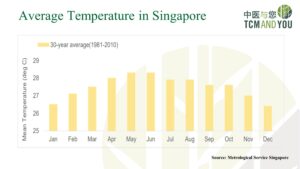
During this period, there is often a noticeable rise in allergic rhinitis, lingering coughs, flu-like symptoms, digestive discomfort, body aches, and general lethargy. From a Traditional Chinese Medicine (TCM) perspective, Wind (风) becomes more active in early spring and frequently combines with Dampness (湿). When Wind-Damp invades the body, it most easily affects the Lungs and weakens the Spleen, particularly in individuals whose internal balance is already compromised.
Li Chun (Beginning of Spring): Rising Yang, Yet Still Tender
Li Chun begins on 4 February 2026, marking the first solar term of the year and the symbolic return of Yang energy. However, this Yang is still tender and not yet stable. Cold and dampness have not fully withdrawn, while internal movement has already begun.
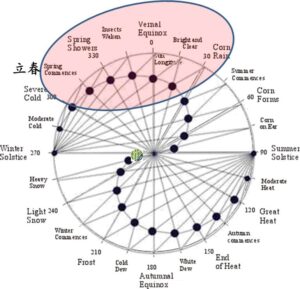
This explains why early spring often feels contradictory—externally warmer, yet internally tiring; mentally more active, yet physically heavy. Health preservation during Li Chun is therefore not about aggressive cleansing or strong tonification, but about supporting the rise of Yang while protecting the body’s foundation.
TCM Perspective: Li Chun and the Liver System
In Traditional Chinese Medicine, Spring corresponds to the Liver, associated with the Wood element. The Liver governs the smooth flow of Qi, emotional regulation, circulation, and the flexibility of tendons and joints.
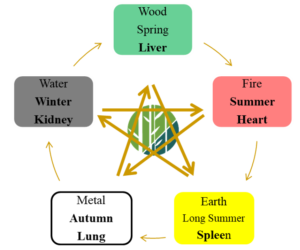
As Yang Qi rises during Li Chun, Liver Qi naturally becomes more active. When this movement is smooth, the body feels light, motivated, and refreshed. When constrained or excessive, symptoms such as irritability, headaches, bloating, poor appetite, and disturbed sleep may arise. This is commonly described as Liver Qi overacting on the Spleen, resulting in digestive weakness and fatigue.
The key health principle for Li Chun 2026 is therefore clear:
Support Liver Qi, strengthen the Spleen, protect the Lungs, and avoid excessive stimulation.
Spring health is about gentle awakening, not forceful acceleration.
Acupressure Massage for Li Chun 2026
(5–10 minutes daily, preferably in the morning or early evening)
Gentle acupressure helps regulate rising energy, stabilise digestion, and protect against Wind-Damp invasion.
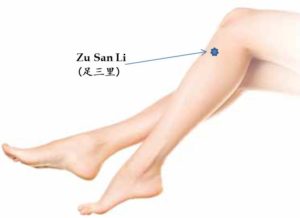
Zusanli (ST36)
Location: Four finger-widths below the kneecap, one finger-width lateral to the shinbone.
Function: Strengthens the Spleen and Stomach, improves digestion, boosts immunity, and enhances adaptability during seasonal change.
Method: Massage firmly until warmth or a mild aching sensation is felt.
Duration: 1 minute per side.
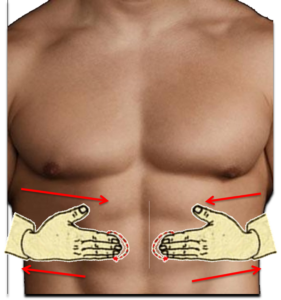
Qimen (LV14)
Location: On the chest, directly below the nipple, in the sixth intercostal space, approximately four finger-widths lateral to the midline.
Function: Regulates Liver Qi, harmonises the Liver and Spleen, relieves chest tightness, bloating, sighing, and stress-related digestive discomfort. Particularly useful during early spring when Liver Qi rises.
Method: Gentle pressing or circular massage while breathing slowly.
Duration: 30–60 seconds per side.
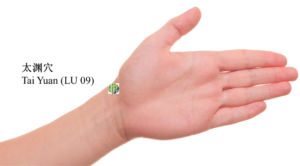
Taiyuan (LU9)
Location: At the wrist crease, on the radial side near the base of the thumb, where the pulse is felt.
Function: Strengthens Lung Qi, supports respiratory resilience, and helps prevent coughs and allergies during windy weather.
Method: Apply comfortable pressure while breathing slowly.
Duration: 1 minute per side.
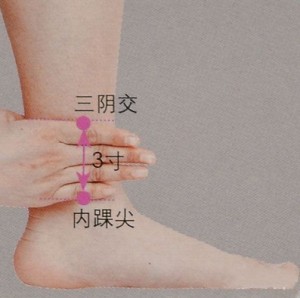
Sanyinjiao (SP6)
Location: Four finger-widths above the inner ankle bone, just posterior to the tibia.
Function: Harmonises the Liver, Spleen, and Kidney systems; supports digestion, sleep, and hormonal balance.
Method: Gentle pressure (avoid strong stimulation during pregnancy).
Duration: 1 minute per side.
Frequency: Once daily; twice daily during cooler or windy days.
Medicated Diet Recommendations for Early Spring
(Light nourishment, consistent support)
Diet during Li Chun should gently warm the body, support digestion, and avoid burdening the Spleen. Excessively raw, iced, greasy, or overly spicy foods should be minimised.
- Yam & Coix Seed (Chinese Barley) Porridge
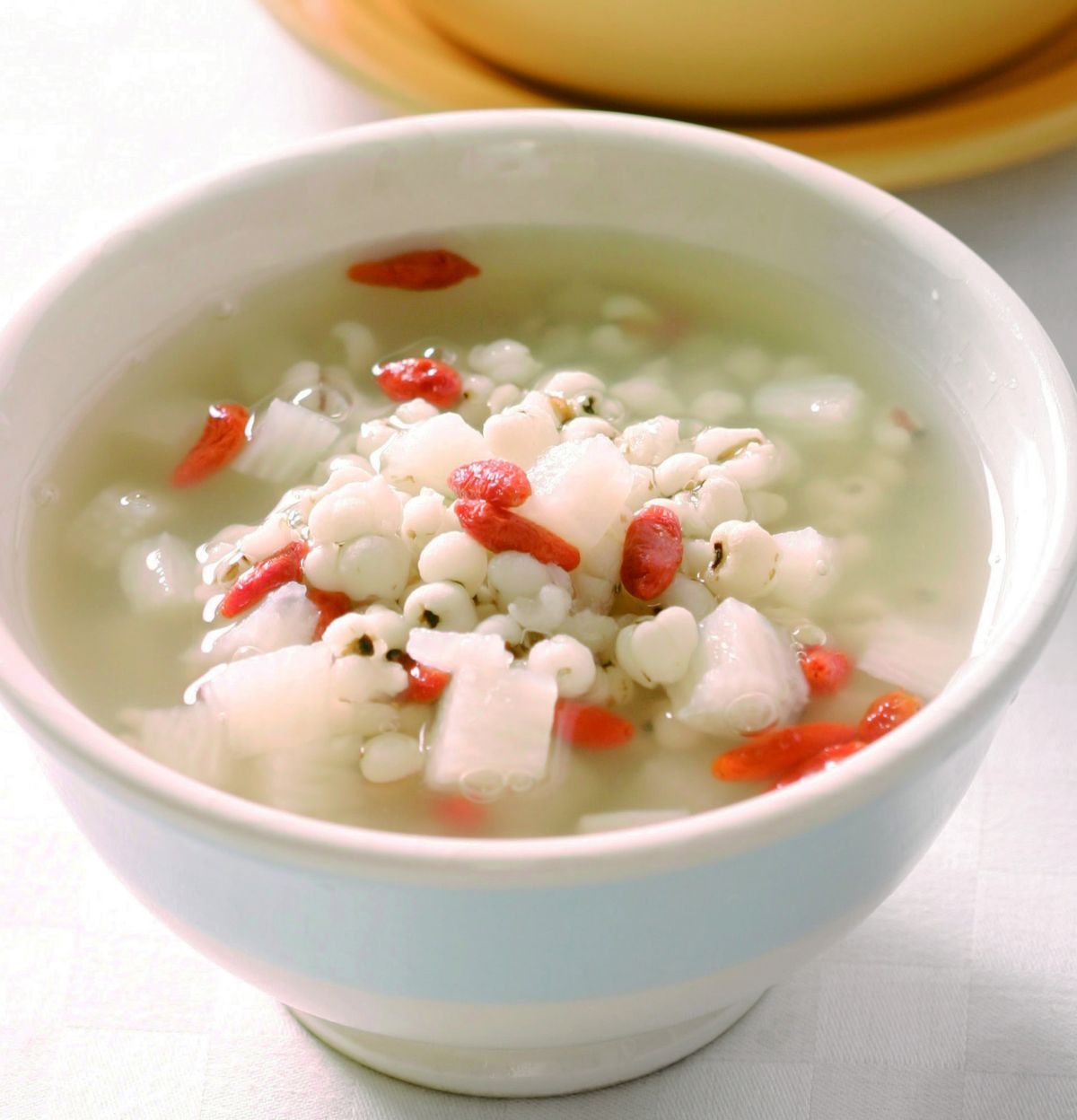
- Strengthens digestion and reduces dampness
- Chinese Yam – 100 g
- Coix Seed (Chinese Barley) – 30 g
- Rice – 50 g
- Goji Berries – 5 g
- Water – 1.2 litres
Method: Soak coix seed for 1 hours. Simmer all ingredients for about 60 minutes until soft. Consume warm.
- Pear, Lily Bulb & Almond Soup
- Moistens the lungs and relieves cough
- Pear – 1 medium, cut into chunks
- Dried Lily Bulb – 20 g
- Sweet Almonds – 10 g
- Rock Sugar – small amount (optional)
- Water – 1 litre
Method: Simmer gently for 30–40 minutes. Drink warm.
- Light Chicken Soup with Ginger & Goji
- Supports Qi and gently warms Yang
- Chicken (skin removed) – 300 g
- Fresh Ginger – 10 g (3–4 slices)
- Red Dates – 4 pieces
- Goji Berries – 10 g
- Water – 1.5 litres
Method: Blanch chicken briefly, then simmer all ingredients for about 1 hour. Consume warm.
Dietary principle: Nourish lightly and consistently. Avoid sudden dietary extremes or heavy tonic use during Li Chun.
Living in Rhythm with Early Spring
As Yang energy begins to rise, align daily life gently with the season:
sleep slightly earlier and wake calmly,
engage in light movement rather than intense exercise,
maintain emotional steadiness, and
protect the body from wind, especially after sweating or bathing.
Live Online Li Chun Sharing — You’re Invited
To explore these concepts more systematically, I will be hosting two live Zoom sharing sessions on Friday, 6 February 2026:
- Currently video in editing, will share when ready.
Feel free to invite your family and friends from around the world —seasonal health is best cultivated together.
Alumni Privilege:
As a token of appreciation, alumni may use the discount code TNYAVIP to enjoy 10% off selected items on our E-store.
Closing Reflection
Although Singapore lies close to the equator, our bodies still respond to seasonal rhythms. Li Chun reminds us that health is not built through reaction, but through awareness and timely adjustment.
May this early spring bring gentle renewal, stable energy, and inner balance to you and your loved ones.
Warm regards,
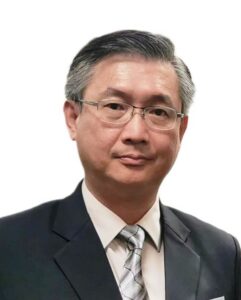
Dr Clement Ng Shin Kiat
Founder, TCMandYou Pte. Ltd.
Updated: 02/02/2026
Latest courses
Online Consultation
Online courses at Udemy,
- Feeling S.A.D.? (Stress, Anxiety & Depression) Let TCM help you
- How to improve My quality of Sleep – the TCM ways
- Certificate in Effective Acupressure Massage for Baby
- Why am I fat when I don’t eat much! – Let TCM helps you!
- Post-Covid Syndromes, Let TCM helps You!
- Insomnia, Let TCM Helps you!
提供的服务 Services provide
——————————————
Clinic Appointment 诊所预约
- +65 8168 2062 @ G&G TCM Medical 国医堂
- 54 Smith Street, Singapore 058960
- Monday and Friday – 1.30pm – 5pm
- +65 8606 6656 @ FerraGold TCM @ Orchard 富乐康中医
- 1 Scotts Road #02-24/25 Shaw Centre, Singapore 228208
- Thursday and Saturday – 11.30am – 3pm
- By Appointment only/ 请预约