Gazfros
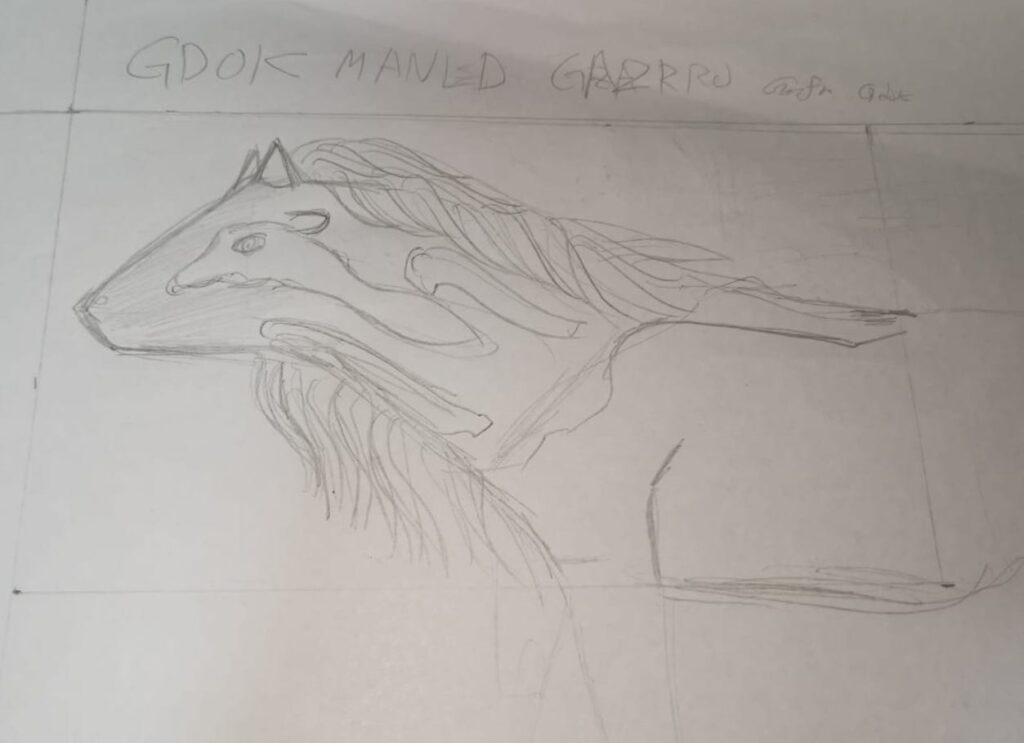
(A sketch of the GDOK Maned Gazfro)
Taxonomy
Order: Clawhooves
Suborder: Socialclawhooves
Family: Gazfroidae
Subfamily: Gazfro
Genus: Gazfro
General Information
Gazfros are species of social clawhooves which are highly social and intelligent. Gazfros are generalist that can inhabit a wide range of environment and niches. Gazfro species are extremely adaptable and most of them are capable of having omnivorous diet.
Behaviour
Mating and Courtship
The male gazfro in general is less aggressive compared to other males members of related taxons. (related species and genera) however male can fight over mates. Males can show their ‘fitness’ by displaying patterns on their eye area and neck.’Proto-monogamous’ behaviour which mate guarding for a specific mate can happen for a while though length can differ by individual and species. For most cases, males and females mate with every reproductive members and live in promiscuous (multi-male multi female) societies (similar to chimpanzees and macaques)
Social Group
Gazfro population can vary from species to species. Grassland species shows the most variation, with predatory species living in smaller group from 11 to 40 while non-predatory species can have groups exceeding 100. Most groups have on average 75 to 80 members. Population can also intermingle with members from other groups, meaning that group membership is not always constant. A gazfro group can be divided into units. Often a unit contains 5 to 7 members of the same sex. Which often would intermingle with another unit of the opposite sex .(although homosexuality in Gazfros do exist) This would form a ‘couple unit’. Although a couple unit can also be flexible while some couple units are formed from closely knitted units
Communication
Gazfros have evolved a repertoire of communications that vary from species to species. With some species making basic vocalisations to some species capable of communicating in some sort of a proto-language
Evolution
About Gazfro LCA (main article).
Gazfro LCA was the common ancestor to all living Gazfro species. Gazfro LCA evolved from groups of intelligent social clawhooves. This ancestral species of Gazfro exhibit polymorphism in terms of the manes as well as body patterns. Gazfro LCA likely also exhibit ‘proto-monogamous’ traits such as mate guarding and pair bonding
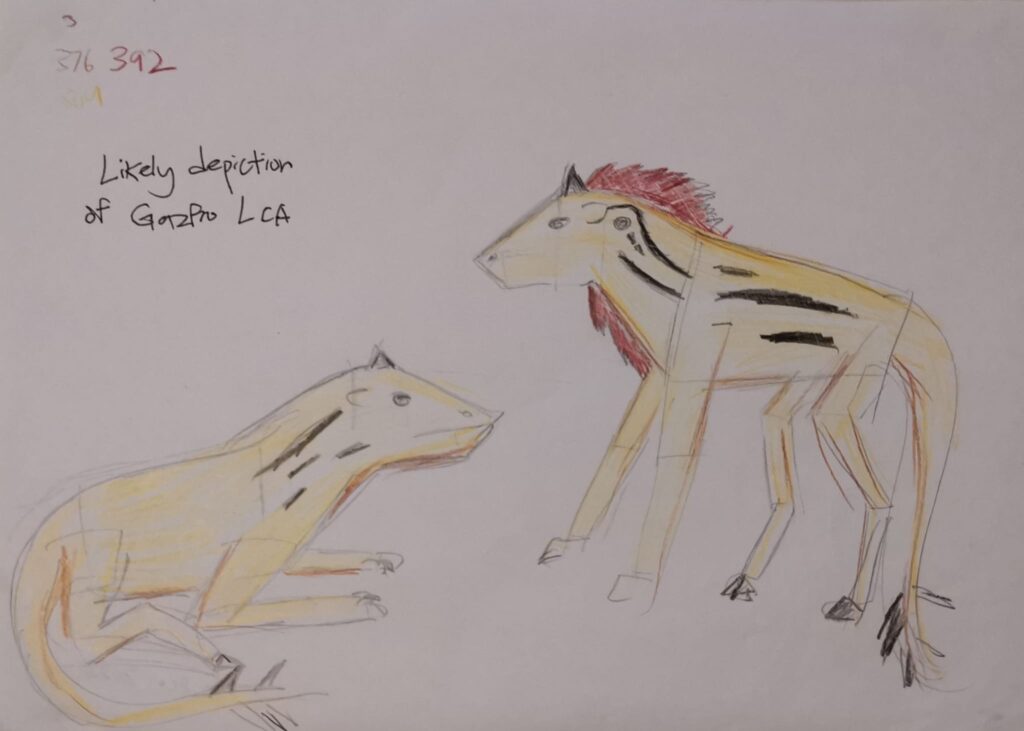
Depiction of A Pair of the Last Common Ancestor of Genus Gazfro
Gazfros will later evolve into different species. Some noticable differences will be the patterns in both genders and sometimes size. Some male (and occasionally females) will grow manes. Some gazfro lengthened their mate guarding behaviour can later became more monogamous fostering into the pair-bond. Gazfro cognitive would also change and diverge as well. Gazfro repertoire of communication increased in most later species.
(show phylogeny)
Species
Predatory Gazfro
Common Grassland Gazfro
Maned Gazfro
Common Forest Gazfro
Scavenging Gazfro
Painted Gazfro
GDOK Maned Gazfro
Cultural Significance and Domestication
Different species of Gazfros have been domesticated in different locations. Examples such as Iltralpea, Promdric regions and Kreotza are examples of regions that domesticate Gazfros. Domesticated Gazfros serves the role similar to that of a domesticated dog. Domesticated Gazfro often assist humans in translating sensory data that humans are not capable of, like scent, sight and hearing frequency in which humans can’t hear. Domestication of Gazfros likely occur due to frequent interaction and mutualism formed between Gazfro population and human population. Although some are being deliberately tamed and domesticated.
Most Gazfros whether wild,tame or domesticated are often considered to be well respected across various culture for their intelligence. Because of their intelligence and capability of communication. Many culture forbid or avoid the killing and eating of Gazfro, viewing them as too sacred for human consumption. However, there are some cultures that hunt them for food regardless.